When you click the link, it will take you to the corresponding page.
明太子天ぷら
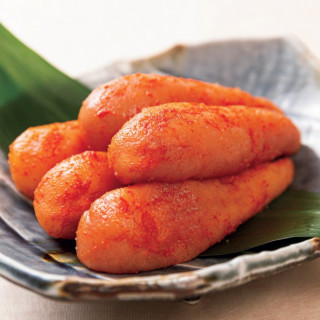
"명란젓(Myeongnanjeot )" is a food that originated in Korea and is also beloved in Japan. In Japanese, two words refer to "명란젓" (Myeongnanjeot in Korean). The first is "明太子" (Myeongtaiko), which refers to spicy Myeongnanjeot containing chilli powder. "明太((Myeongtai) " is the Japanese pronunciation of "명태" (Myeongtae fish, pollock) in Korean, and "子" (ko) means child, hence it signifies the child of Myeongtae, which means Myeongtae roe. The other word is "たらこ" (Tarako), which refers to white-coloured Myeongnanjeot without chilli powder. "たら" (tara) means "cod" (In Japan, there is not a strict differentiation between cod and Myeongtae), and "こ" (ko) means a child as mentioned before. They are divided into "明太子" (Myeongtaiko) and "たらこ" (Tarako) based on the presence or absence of chili powder. In Japan, when people hear"明太子" (Myeongtaiko) ," they often think of Fukuoka. Mr. Kawahara Toshio has played a significant role in making Myeongnanjeot a representative industry in Fukuoka. Mr. Kawahara Toshio, a Japanese person born and raised in Korea, returned to mainland Japan after Japan's defeat in World War II and opened a grocery store called "Fukuya" in Nakasu Market in Fukuoka (which has now become the largest and most famous company in Japan for Myeongnanjeot production and sales). In 1949, he started producing and selling Myeongnanjeot. Mr. Kawahara improved the Korean Myeongnanjeot to suit the taste of the Japanese people. He developed a method of marinating Myeongnanjeot in a seasoning sauce, which was different from the traditional Korean method. (The method of marinating in a seasoning sauce developed by Mr. Kawahara was later imported back to Korea and has become the mainstream method, replacing the traditional method). Myeongnanjeot gradually gained recognition, and many Myeongnanjeot shops emerged in Fukuoka (It is said that Mr. Kawahara did not keep the recipe of Myeongnanjeot as a secret but shared it with other business owners). In 1975, with the opening of the Shinkansen to Hakata (Hakata Station in Fukuoka), the distribution of Myeongnanjeot became smoother, and it became well-known nationwide. It is said that Japan consumes as much as 30,000 tons of Myeongnanjeot annually. Just by looking at the various dishes and products made with Myeongnanjeot, one can understand how deeply it has permeated Japanese people's lives.
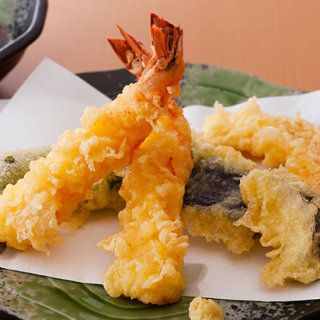
Tempura is a dish where ingredients are coated with a batter made of flour, eggs, and water, then deep-fried. It is one of the signature dishes of Japan. Often, the word "ten" is added after the name of the ingredient, such as "shrimp tempura" becoming "shrimp ten", "eggplant tempura" becoming "eggplant ten", and "fish cake tempura" being called "fish cake ten". Originally, tempura was a street food sold by vendors, but now it's commonly found in supermarkets and side-dish stores. It's also a popular homemade dish. However, the rise of high-end tempura restaurants and its inclusion in luxury Japanese dining (known as "Ryotei") has elevated its image. While seafood, vegetables, and mushrooms are traditional ingredients for tempura, nowadays various other ingredients like cheese, soft-boiled eggs, and bananas are also used. When eating tempura, it is commonly dipped in a soy-based sauce called "tempura sauce" or salt. Some might add grated radish to the sauce, or sprinkle lemon or yuzu directly onto the tempura for a refreshing taste. There are various flavored salts available such as matcha salt, yuzu salt, and curry salt.